

There are voices that entertained the audience, and then there are voices that alter the course of music itself across genres and decades! Back in the-hey-days vocal artists didn’t just perform — they reshaped the sonic landscape, rewrote expectations, and carved out new lanes that others would eventually follow.
Their influence isn’t measured only in chart positions or awards, but in the way their sound becomes a cultural reference point: a blueprint, a spark, a seismic shift.
These are the artists whose tone, technique, attitude, or sheer presence forced the industry to evolve! The ones who made producers rethink what was possible, who inspired entire waves of imitators, and who left fingerprints on genres that still haven’t faded. Their voices became movements, their performances became milestones and their legacy is woven into the DNA of modern music.
Before streaming, before algorithms, before every genre lived in your pocket, music had a way of arriving in your life like a moment you could feel. A voice on the radio that stops you mid stride or a performance on the big screen that changed the way you saw the world. Certain vocal artists didn’t just define genres — they became cultural touchstones, shaping both the sound of their era and the stories told in cinema.
This article revisits those genre defining vocal artists — the ones who shaped the music world and left fingerprints all over the big screen. The icons whose voices became characters, whose songs became storylines, and whose legacy still flickers like a projector bulb warming up in a darkened theatre.
This article celebrates those genre-defining vocal artists — the trailblazers, the rule-breakers, the innovators — who didn’t just leave a mark but left a signature.
If you trace the lineage of modern pop harmony – from ABBA to En Vogue to K pop – you’ll find that the Andrews Sisters are the missing link between jazz era vocal tradition and contemporary pop architecture. They didn’t just influence other singers; they influenced how producers think about voices as layered, rhythmic instruments.
The Andrews Sisters didn’t just fit into the evolution of popular music – they accelerated it, bent it, and in some cases outright re‑engineered what vocal performance could be. You can hear it in Boogie Woogie Bugle Boy and Bei Mir Bistu Shein, where their tight‑precision three‑part harmony locks in like a horn section, or in Rum and Coca‑Cola, which shows how effortlessly they folded global influences into American pop. They brought rhythmic vocal drive, genre‑blending showmanship, and a level of technical unity that helped define modern pop vocal arranging. Their sound became a template for everything from girl groups to jazz fusion to contemporary vocal production.
Their innovations didn’t just shape their era – they set the technical and aesthetic rules for how vocal groups could function in popular music. They’re one of the earliest examples of a group whose sound became a cultural touchpoint, while modern producers still use their harmonic spacing, rhythmic phrasing, stacked vocal textures, and interplay between lead and harmony lines. And then, in a completely different lane but with equally seismic impact, came Julie London – a crossover vocal artist who proved that influence isn’t always about volume, velocity, or vocal fireworks. Sometimes it’s about restraint so controlled it becomes its own form of power.
Where the Andrews Sisters expanded the architecture of harmony, London reshaped the emotional vocabulary of popular singing. Her intimate, close mic style – that smoky contralto delivered in a near whisper – helped usher in a new era where the recording studio itself became an instrument.
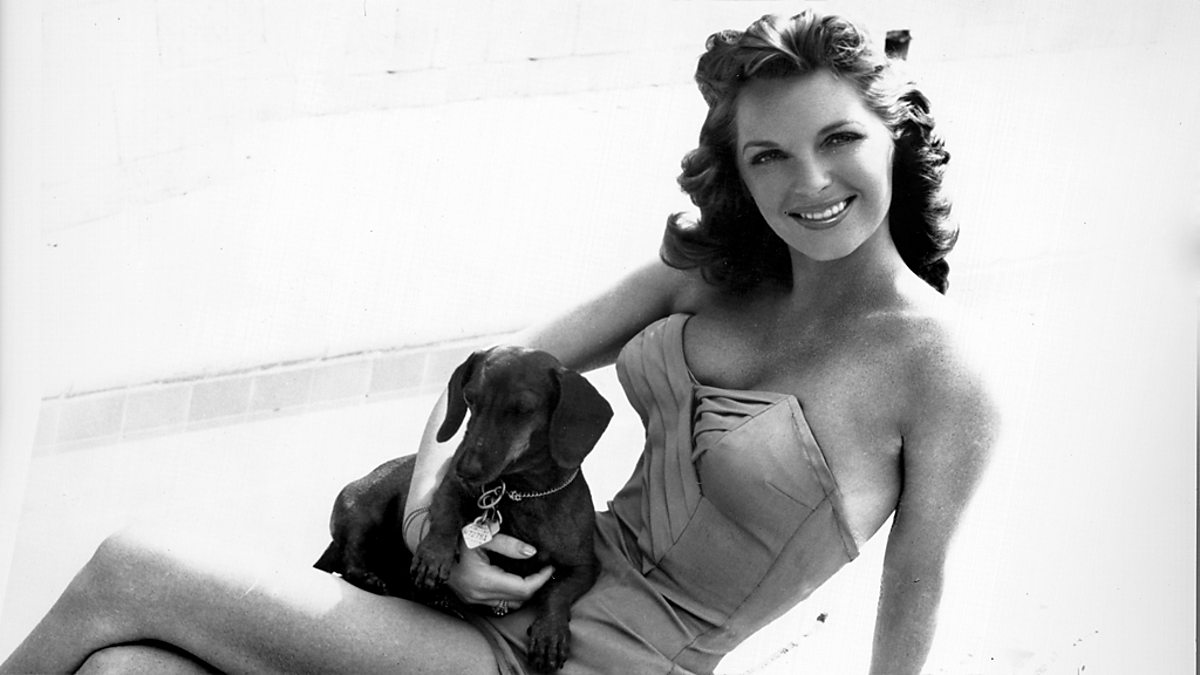 Julie London – Michael Ochs archive
She demonstrated that a vocal could be cinematic without being grand, sensual without being explicit, and deeply expressive without ever rising above a murmur. Listen to her on Cry Me a River or I’m in the Mood for Love — the way she turns restraint into drama, or how Blue Moon and No Moon at All feel like scenes lit by a single lamp. Modern pop, jazz pop, and even certain strains of indie and neo-soul still borrow her blueprint: the minimalist delivery, the conversational phrasing, the emphasis on tone over ornamentation.
Julie London’s influence is the quiet counterweight to the Andrews Sisters’ exuberant precision. Together, they represent two poles of crossover innovation – one redefining harmony as spectacle, the other redefining intimacy as artistry. Both left unmistakable marks on the entertainment industry, and both helped expand the possibilities of what a vocal performance could mean, could evoke, and could become.
Variety Shows
Variety shows weren’t just entertainment — they were a gateway for young people into vocal culture, musical identity, and a wider world. As youth audiences in the U.S. and Australia tuned in, they were absorbing new vocal styles, new ensembles, and new cultural possibilities.
Andy Williams in the U.S. and shows like In Melbourne Tonight or Bandstand in Australia, helped shape how young people understood music, performance, and even adulthood.
Andy Williams was central to the golden age of U.S. variety shows — a format built on live music, comedy sketches, and charismatic hosts — and Australia developed its own rich tradition of variety TV, from the 1950s through to the 1990s, with shows like The Paul Hogan Show, The Penthouse Club, The Mike Walsh Show, Hey Hey It’s Saturday, and many more! In-fact 135 if we’re counting.
If Andy Williams gave variety its velvet tuxedo, punk later tore the sleeves off — same spirit, different volume.
The British variety tradition and the later punk movement occupy different aesthetic registers but share a common cultural impulse: an irreverent, working class challenge to authority and decorum.
Variety expressed this through comedic exaggeration and playful subversion; punk amplified it into confrontation and noise. In this sense, punk can be understood not as a rupture from variety entertainment but as its intensified descendant — the same cheekiness, delivered at a radically higher decibel level.
Sid and Benny sit on the same cultural spectrum — swap the sturdy working man shoes of variety entertainment for the heavy Doc Martens of punk and you’re not entering a new world, just a louder one. Hill’s cheeky, working-class irreverence becomes Sid’s confrontational rawness. Punk is simply the variety show with the safety rails ripped off.
It’s the same British cheekiness expressed at two completely different volumes. Benny Hill is the wink and nudge version while Sid Vicious is the scream in your face version. But the instinct underneath — the urge to poke authority, to laugh at the posh, to celebrate the scruffy, messy, working-class energy of Britain — is identical. One just wears a silly hat, the other wears a safety pin through his cheek.
The “Lanky Yank” (Don Lane) was a defining face of Aussie variety TV in the mid 70’s to early 80’s. He was an American-born entertainer who came to Australia for what was meant to be a six‑week fill‑in gig… and instead became a household name for decades. His flagship program, The Don Lane Show (1975–1983), was one of the most-watched variety shows in Australian TV history, famous for big-name guests, comedy, music, and his legendary chemistry with Bert Newton.
He blended American late-night showmanship with Australian humour and looseness. His shows mixed interviews, sketches, musical numbers, and spontaneous chaos that led to him becoming one of Australia’s biggest-ever variety and talk show stars, a New Yorker who somehow ended up defining a whole era of Aussie television.
Before Australia ever heard of him, Lane was working the U.S. nightclub circuit — the kind of rooms where you had to sing, tell jokes, banter, and keep the crowd warm. He wasn’t trying to be the next Sinatra — but he did see himself as a singer first, comic artist second and a TV host third. He was a storytelling singer, which is the crooner’s bread and butter.
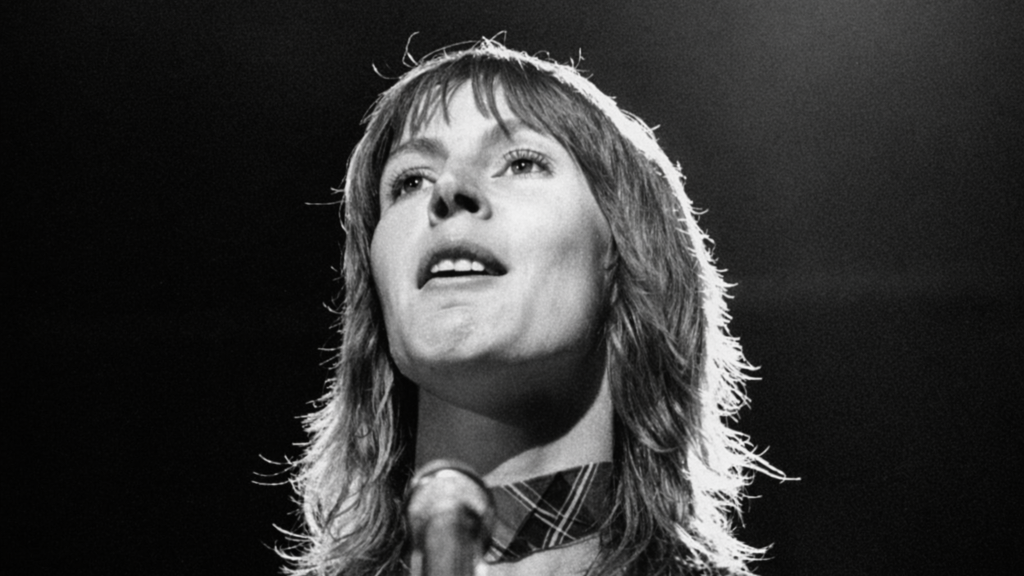
Helen Reddy’s story is way richer than her title hit “I Am Woman“, a headline she’s most famous for. Her presence as a performer wasn’t just that of a singer — Reddy was a cultural force, a disruptor, and one of the most globally successful Australian artists of the 20th century. When she stepped onto The Midnight Special (NBC, 1975–76), she wasn’t merely appearing on a major American music program; she was hosting one of the biggest late night stages in the world. And she did it with the kind of authority, poise, and unshakeable self belief that made Americans sit up and realise: this Australian woman wasn’t here to participate — she was here to lead.
Her tenure on The Midnight Special showed the full scope of her power. Reddy wasn’t just introducing acts; she was shaping the tone of the show, commanding the room, and bringing a distinctly Australian directness to a US television landscape that often favoured flash over substance. Even when the program swung into the wild, anarchic comedy of Steve Martin’s 1975 appearances — all white-suit chaos, banjo gags, and surreal punchlines — Reddy remained the steady centre of gravity. She delivered performances with a calm, almost regal confidence, the kind that comes from someone who knows exactly who she is and what she stands for. In an era dominated by American stars, Reddy stood out as a woman who could hold the spotlight without raising her voice, without theatrics, without compromise.
Soundtrack Legends
Held up high as a little reminder to oneself—somewhere between the popcorn, the big screen, and those absolute belters blasting through the speakers—are the soundtrack legends who managed to hit that perfect mix of honest storytelling, standout vocals, and pure pop culture magic.
They’re the artists who make you feel something, whether you’re a music nerd, a casual movie night fan, or just someone who loves a tune that sticks with you long after the credits roll.
Queen was one of those bands that had definitely cultivated a following among audiences world-wide with their 1980 soundtrack for Flash Gordon.. a space opera superhero film with a glorious mash of operatic rock, sci-fi synths and pure Freddie Mercury theatricality.
Flash Gordon was no flash in the pan though as Freddie’s high octane energy went onto give us classic songs such as “Who Wants To Live Forever“, “Gimme the Prize” and “Princes of the Universe” which were featured in the 1986 fantasy action-adventure film “Highlander”.
Both films became fan-canon, even though neither film originally released a full official Queen soundtrack album their music was already destined for legendary status.
Whitney Houston—best known for those skyscraper high ballads that could make entire movies cry—didn’t just sing on a soundtrack, she detonated it. “I Will Always Love You” from The Bodyguard wasn’t merely a hit; it was a cultural shockwave that turned a romantic thriller into a global emotional crisis. Her voice didn’t accompany the film, it eclipsed it, becoming the emotional centrepiece people still associate with heartbreak, longing, and cinematic drama.
Most listeners already understand that powerhouse diva side of her—the vocal athlete who could bend a melody into something unforgettable. But there’s another layer that deserves just as much spotlight: the storyteller. Whitney had an uncanny ability to make a song feel lived in, as if she were pulling you into her own memories. She wasn’t just performing; she was translating feeling into sound, giving pop music a depth that made it resonate across generations and genres.
Her film roles added even more dimension. In Sparkle, she brought gospel warmth, maternal gravitas, and a quiet strength that grounded the story. It reminded audiences that behind the vocal fireworks was a woman deeply connected to her roots, her faith, and her craft. Across screens and soundtracks, Whitney reshaped what it meant to be a music film icon—bridging soul, pop, and cinematic storytelling with a voice that didn’t just define moments, it created them.
With a record 35 Grammy Awards, a Primetime Emmy, and a Peabody, Beyoncé isn’t just decorated – she’s the benchmark. She’s the most-awarded artist in the histories of the BET Awards, MTV VMAs, NAACP Image Awards, and Soul Train Awards. She’s also the first woman to headline an all stadium tour and the highest grossing Black live performer in history. In other words: if music had a leaderboard, she’d be sitting on top polishing her crown.
But Beyoncé’s relationship with film and musical storytelling is where things get interesting, especially for anyone who hasn’t followed her career closely. She doesn’t simply “do” soundtracks – she treats them like sovereign territory. When she enters a musical project, she behaves like someone claiming land.
Her turn in Dreamgirls wasn’t just a cameo or a pop star dabbling in acting. She earned serious critical acclaim, anchored the film’s emotional arc, and delivered “Listen“, a power ballad that became one of the defining soundtrack songs of the 2000s. It’s the kind of performance that makes you realise she’s not moonlighting – she’s expanding her empire.
Then came Black Is King, a visual album tied to “The Lion King: The Gift. Beyoncé didn’t just contribute songs; she wrote, produced, directed, and starred in a full-scale cinematic experience. It’s part mythology, part fashion odyssey, part cultural manifesto. The project showed she can build a film world from scratch and soundtrack it with the precision of someone who understands how music shapes narrative.
And when Disney tapped her to voice Nala in The Lion King remake, it wasn’t just stunt casting. It was a reminder that she can inhabit a character, deliver the emotional beats, and still dominate the soundtrack. She didn’t just voice a lion – she ruled the savannah.
Life has a funny way of scoring itself. Even when we’re not sitting in a cinema, the world around us hums with its own drop off and pick up register — the love songs we cling to, the shortcomings we laugh through, the gospel storytelling that steadies us when things wobble. And every now and then, a soundtrack legend steps in and reminds us that the audible sounds of life aren’t just background noise. They’re emotional landmarks.
Take Cher, the eternal showstopper with a fog machine seemingly built into her DNA. Her Burlesque power ballad, “You Haven’t Seen the Last of Me”, isn’t just a movie moment — it’s the kind of anthem people silently mouth to themselves while walking away from something they’re finally ready to outgrow. Cher doesn’t just sing; she resurrects whatever part of you thought it had dimmed.
Then there’s Mariah Carey, queen of glittery chaos and unapologetic pop drama. Her Glitter era may have been a cultural rollercoaster, but the soundtrack sparkles with that Y2K confidence we all wish we had on tap. “Loverboy” isn’t just a song — it’s the sound of someone refusing to dim their shine, even when life throws a few too many plot twists. Mariah embodies the meltdown and the comeback, often in the same breath.
Lauryn Hill brings a different frequency entirely — the soulful storyteller who made choir kids cool. Her performance of “His Eye Is on the Sparrow” in Sister Act 2 is the kind of moment that makes you sit up straighter, breathe deeper, and remember that sincerity still has a place in the world. Lauryn doesn’t perform; she testifies. She turns a simple scene into a spiritual checkpoint.
And then Bette Midler, the Divine Miss M, who weaponises emotion with surgical precision. “The Rose” isn’t just a soundtrack staple — it’s a slow burn reminder that vulnerability is a strength, not a liability. Bette’s voice wraps around you like a warm hug and a heartbreak at the same time, the kind of song that makes you reflect on every love you’ve ever held, lost, or nearly talked yourself out of.
Together, these artists form a kind of emotional compass — a reminder that the sounds we absorb from the big screen often mirror the sounds we carry through our own lives. Their songs become the audible stitching between our highs, lows, and everything in between. They don’t just soundtrack films; they soundtrack us.
The genre fluidity of early variety shows helped normalize the idea that vocal artists could cross stylistic borders without losing their identity. In their standing-of-the-day, this wasn’t radical — it was simply how entertainment worked. British variety shows were the original stage for working-class cheek, a place where the posh got lampooned, the scruffy got celebrated, and the whole nation learned to laugh at itself. Turn up the gain, rip out the safety rails, and that same spirit becomes punk.
As the decades rolled on, crossover artistry didn’t fade — it evolved. Flash Gordon brought bold, camp, synth-driven, comic-book operatic energy to the screen. Highlander delivered mythic, emotional, tragic, character-driven rock balladry. These weren’t just soundtracks; they were vocal worlds. These were the voices that drifted out of record stores, echoed through concert halls, and spilled into movie theatres, becoming part of the collective memory. Their songs weren’t just hits; they were scenes. Their performances weren’t just musical milestones; they were cinematic moments stitched into the fabric of pop culture.
Crossover vocal artists didn’t just shape entertainment — they shaped how we remember it. They gave us eras, aesthetics, and emotional worlds to live in. And every time a new artist crosses a boundary, they’re adding another thread to that long, colourful tapestry.
In the end, the lineage of all that’s come before us — anchored in its unmistakable moments — continues. The stages changed, the boots changed, the genres changed, but the instinct to cross borders will never change. It’s the quiet pulse that’s carried artists from one era to the next, and it’s still beating beneath every new voice that dares to step into the unknown.
If you appreciate this type of in-depth, independent, journalism, then please consider donating to keep this blog rolling! Your support is crucial and much appreciated. Many thanks to those of you who have already contributed.



Comments