

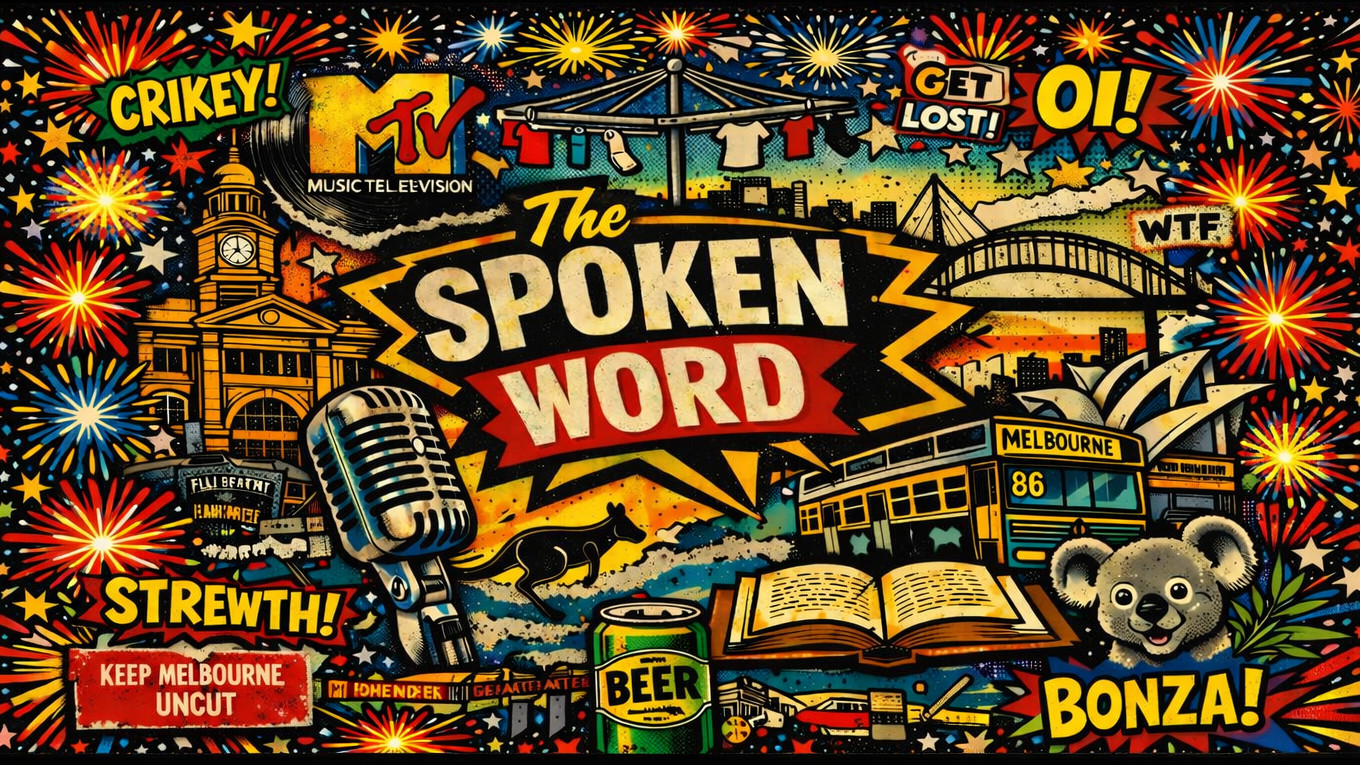
Despite the big bang theory that brought all of us at this single point-in-time! MTV Unplugged Spoken Word never featured Australian artists in its official lineup — but the spirit of the format found a uniquely local evolution here in Australia.
Where MTV US embraced the fierce, confrontational energy of performers like Henry Rollins and Maggie Estep — “I’m an Emotional Idiot So Get Away from Me” — Australia’s approach softened the edges. It pivoted toward a model that fused poetic narration with melodic, stripped-back musical arrangements, mirroring the dreamtime-storytelling traditions that have shaped the world’s oldest continuous living culture.
While MTV Australia didn’t replicate the American format directly, it embraced something arguably deeper: a fusion of contemporary youth culture with the timeless oral storytelling practices of First Nations people. In doing so, it carved out a distinctly Australian interpretation of spoken word — one rooted not in rebellion, but in connection, memory, and the quiet power of a voice carried across generations.
MTV Australia began experimenting with programming in the 1990s that leaned into the raw, unadorned power of spoken word, echoing the acoustic storytelling traditions of First Nations cultures. The overlap shows up in adjacent formats such as acoustic performance specials, Indigenous political spoken‑word moments, and fringe experimental shows that shared the same cultural space.
Richard “Dickie” Wilkins launched his stellar Australian television career as one of the original hosts of MTV Australia when it premiered on the Nine Network in April 1987. At a time when Australian viewing habits were shifting — from the lounge room monoculture of the big three networks to a more global, youth driven appetite for music, fashion, and raw creative expression — Wilkins became the face of a new media frontier.
His charismatic presenting style didn’t just introduce international artists to Australian audiences; it helped redefine how music was experienced on television. In an era when the Sydney Opera House symbolised the nation’s polished cultural identity, MTV Australia brought something looser, more immediate, more plugged into the street. Wilkins stood at the crossroads of those worlds: the grandeur of established Australian arts and the emerging, unfiltered energy of youth culture.
Across his highly successful six year run, Wilkins championed the kind of intimate, artist first storytelling that would later echo the global rise of MTV Unplugged — stripped back performances, candid interviews, and moments where musicians spoke directly to the audience with a kind of spoken word honesty rarely seen on Australian commercial TV. His segments often felt like mini monologues, delivered with warmth and authority, bridging the gap between the polished entertainment journalism of the time and the raw authenticity young viewers were craving.
By the early 1990s, as Australian audiences embraced more diverse and experimental viewing habits — from late night music blocks to alternative comedy and documentary — Wilkins had become the nation’s most recognizable and trusted entertainment journalist. His presence helped anchor MTV Australia within the broader cultural landscape, proving that music television could be both globally connected and distinctly Australian.
MTV Australia — or MTV Down Under, as American fans cheekily branded it — carried a swagger that set it apart from every other global MTV feed. It wasn’t just a relay of U.S. programming; it was a sun‑bleached, surf‑soaked, proudly Aussie remix of youth culture. The network leaned hard into that identity: Summer Beach House specials filmed on local shores, irreverent VJ (video jockey) banter, and a music slate stacked with homegrown acts who rarely got airtime elsewhere. Before the MTV brand formally arrived, you had Richard Wilkins and Basia Bonkowski shaping the country’s early music‑television voice on Channel 10’s Music Video, laying the groundwork for what MTV Australia would later amplify — a mix of pop culture, local discovery, and a wink‑and‑nudge sense of humour that felt unmistakably Australian.
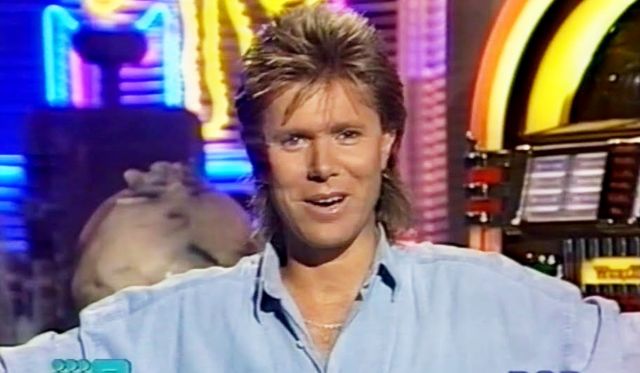 Channel 9 Network Richard Wilkins MTV Australia
By the early 90s, though, the momentum hit a wall. As a former entertainment journalist might frame it: MTV Australia’s creative spark didn’t fade because audiences drifted — it was strangled by licensing complications and shifting network priorities. The Nine Network’s late‑night MTV-branded block, once a lifeline for Aussie youth culture, ceased production in 1993 when rights negotiations collapsed. What remained was a ghost of the original energy: imported clips, no local hosts, and none of the cheeky personality that had made “MTV Down Under” feel like a cultural clubhouse. For many who lived through it, that era still sits in memory as a brief but electric moment when Australia had an MTV that truly sounded — and felt — like home.
But of course that wasn’t the end for MTV Australia! Dreamtime story telling — the sharing of nocturnal visions, stories, and ancestral memory — naturally complements spoken word. Its cadence, its intimacy, its communal energy all align with the acoustic minimalism MTV Unplugged was known for.
Australian Poetry Slam
Australian Poetry Slam (APS) stepped into the national spotlight in 2005, claiming the mantle as the country’s premier stage for spoken word. In true Australian fashion, it didn’t do things by halves — it rolled out heats across more than 60 locations, turning libraries, pubs and community halls into battlegrounds for raw, unfiltered storytelling.
The format is deliberately brutal in its simplicity. Each poet gets two minutes on the mic. No props, no backing track, no safety net. Go over time and the points start slipping away. To keep the spirit democratic, the host plucks five everyday audience members from the crowd to serve as judges. They score each performance from 1 to 10, weighing emotional impact, writing craft and delivery — the holy trinity of slam.
From every local heat, the top two performers advance to their State or Territory Final. Then the stakes rise. The best 16 wordsmiths in the nation earn their place on one of the most iconic stages in the country: the Sydney Opera House. There, under the lights and in front of a roaring crowd, one poet is crowned the Australian Poetry Slam bassador. Along with the title comes a $20,000 prize package and an all expenses paid international touring circuit across arts and writers’ festivals throughout Austral Asia and North America.
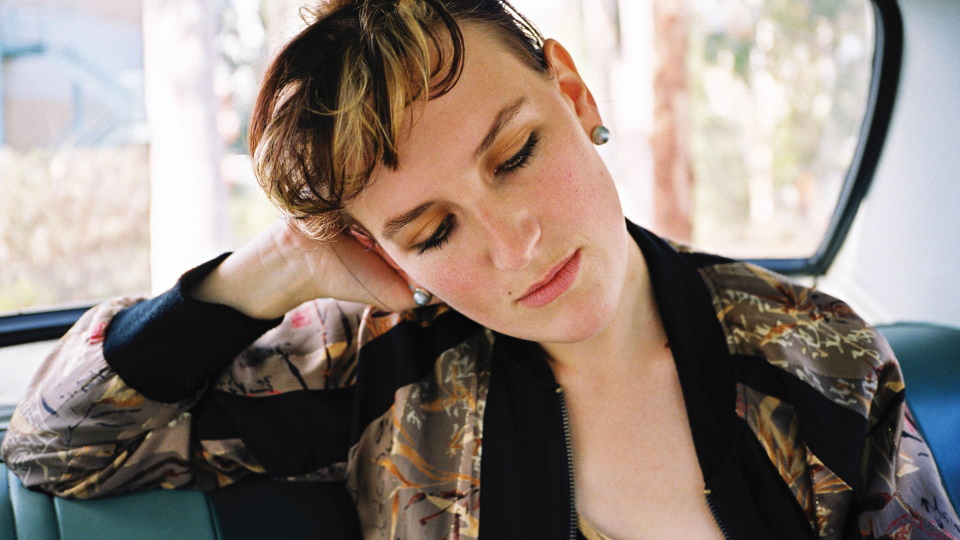
ARIA award‑winning R&B artist Miiesha channels strength through struggle, blending poetry‑slam intensity with the warm, textured sounds of R&B, gospel and soul. A proud First Nations woman from Woorabinda, her music is rooted in family — especially the teachings of her grandmother — and shaped by the grief and healing that come with navigating identity, community, and loss.
She began writing songs as a teenager and first gained attention after performing with the Kulgoodah dancers, winners of the Sydney Opera House’s Dance Rites competition in 2017. That early momentum carried her into the creation of her debut album Nyaaringu (2020), meaning “what happened” in Pitjantjatjara — a nine‑track project woven with spoken‑word interludes from her late grandmother. Those interludes don’t just frame the record; they anchor it, turning Nyaaringu into a conversation across generations, a space where Miiesha processes grief while holding tight to the strength her grandmother passed down.
Nyaaringu earned widespread acclaim, peaking at #28 on the ARIA charts and winning the 2020 ARIA Award for Best Soul/R&B Release, along with multiple National Indigenous Music Awards and Queensland Music Awards. More importantly, it marked Miiesha as an artist who could transform personal pain into collective healing — using her voice to honour family, confront trauma, and carve out a powerful new space for First Nations storytelling in contemporary R&B.
MTV Australia’s Poetry Slam leaning content was culturally diverse and included non-indigenous performers, even though the network never produced a formally branded “MTV Spoken Word” series like the US version. The Australian scene around spoken word, slam poetry, and acoustic storytelling in the 1990s was inherently multicultural, and MTV Australia Poetry Slam programming reflected that broader landscape.
THAT WHICH OSCILLATES BETWEEN QUIET STILLNESS AND VIOLENT TREMOLO ALLOWING US TO COMPREHEND THE POETRY OF TRAUMA, AS WELL AS THE TRAUMA ITSELF.
Enter Luka Lesson, a Greek-Australian wordsmith who essentially walked onto the Australian Poetry Slam stage and proved that modern slam is just ancient mythology with a bassline. Long before he was an internationally acclaimed poet filling rooms worldwide, he was a proud diaspora kid weaponising his heritage under the spotlight. For Lesson, stepping up to the microphone wasn’t just about competing; it was about channeling the raw, rhythmic lineage of Greek oratory tradition and smashing it head-first into contemporary hip-hop. When he took the national crown in 2011, it wasn’t just a win for the underground scene—it was living proof that Australian audiences were starving for deeply authentic, cross-cultural storytelling that connected our modern realities back to ancestral roots.
His signature performances—like his iconic tribute to his Yiayia (grandmother) and her backyard basil leaves—showed exactly why our collective couch-potato viewing habits are hardwired for this stuff. By trading polished, over-produced pop aesthetics for the vulnerability of the bare mic, Lesson connected the dots between a grandmother’s wartime survival in Greece and the late-night hunger of Australian listeners looking for meaning. It is this exact intersection where MTV’s acoustic programming and the sweaty, high-stakes energy of the Australian Poetry Slam collide. They both lean into the undeniable truth that whether we are sitting around a fire on Country, packed into a crowded Sydney theatre, or lounging in front of a television, humans are fiercely evolutionary suckers for a well-told story.
Wilkins did cover major cultural flashpoints featuring the band, including the 1992 Concert for Life in Sydney where Yothu Yindi performed alongside INXS and Crowded House. But the deeper alignment between MTV Australia and First Nations storytelling wasn’t forged through interviews or celebrity encounters. It emerged through the network’s embrace of acoustic intimacy, poetic narration, and the raw vulnerability of the bare mic — qualities that echo Dreamtime storytelling and the communal rhythm of oral tradition.
From Miiesha’s intergenerational R&B testimonies to Luka Lesson’s mythic slam poetry detonations, Australia’s spoken word landscape revealed that audiences weren’t craving spectacle; they were craving connection. They wanted stories that felt lived in, ancestral, and unvarnished — stories that mirrored the quiet power of sitting around a fire, listening to someone speak truth into the night.
And that’s the real punchline of the 60,000 year old couch potato: our viewing habits were never shaped by MTV alone. They were shaped by the oldest continuous culture on Earth, by the rhythms and cadences that have guided storytelling on this continent since long before television existed. MTV Australia simply held up a mirror — and for a brief, electric moment, the nation saw itself reflected in the glow of the screen.
In the end, the story of MTV Australia’s spoken word evolution isn’t about faithfully reproducing an American format — it’s about how a global brand accidentally tapped into something far older, far deeper, and far more culturally resonant than it ever intended. Even without a formally branded “MTV Spoken Word” series, and even without moments like a widely documented one on one Richard Wilkins interview with Yothu Yindi — which never occurred, despite the network’s heavy rotation of the band’s “Treaty” (Filthy Lucre Mix) — MTV Australia still became a conduit for voices that carried history, identity, and Country.
If you appreciate this type of in-depth, independent, journalism, then please consider donating to keep this blog rolling! Your support is crucial and much appreciated. Many thanks to those of you who have already contributed.



Comments